


Tinnitus Treatment
Cardiff & Taff's Well
Wales’ only certified provider of treatment for tinnitus with Lenire.

Specialist treatment for tinnitus
Every person’s experience of tinnitus is different, and that’s why we treat each person as an individual to develop a personalised care plan. For some, we may need to refer you should we have concerns that need looking at by an ENT consultant. For others, we may need to work towards a journey where (if your tinnitus is constant) you don’t notice it very often, and if you do notice it, it doesn’t upset you.
Tinnitus consultations are £200 and every appointment, from your first consultation to your long-term aftercare, is with Sonja Jones, one of the Uk’s leading tinnitus specialists.
Treatment for tinnitus with Lenire
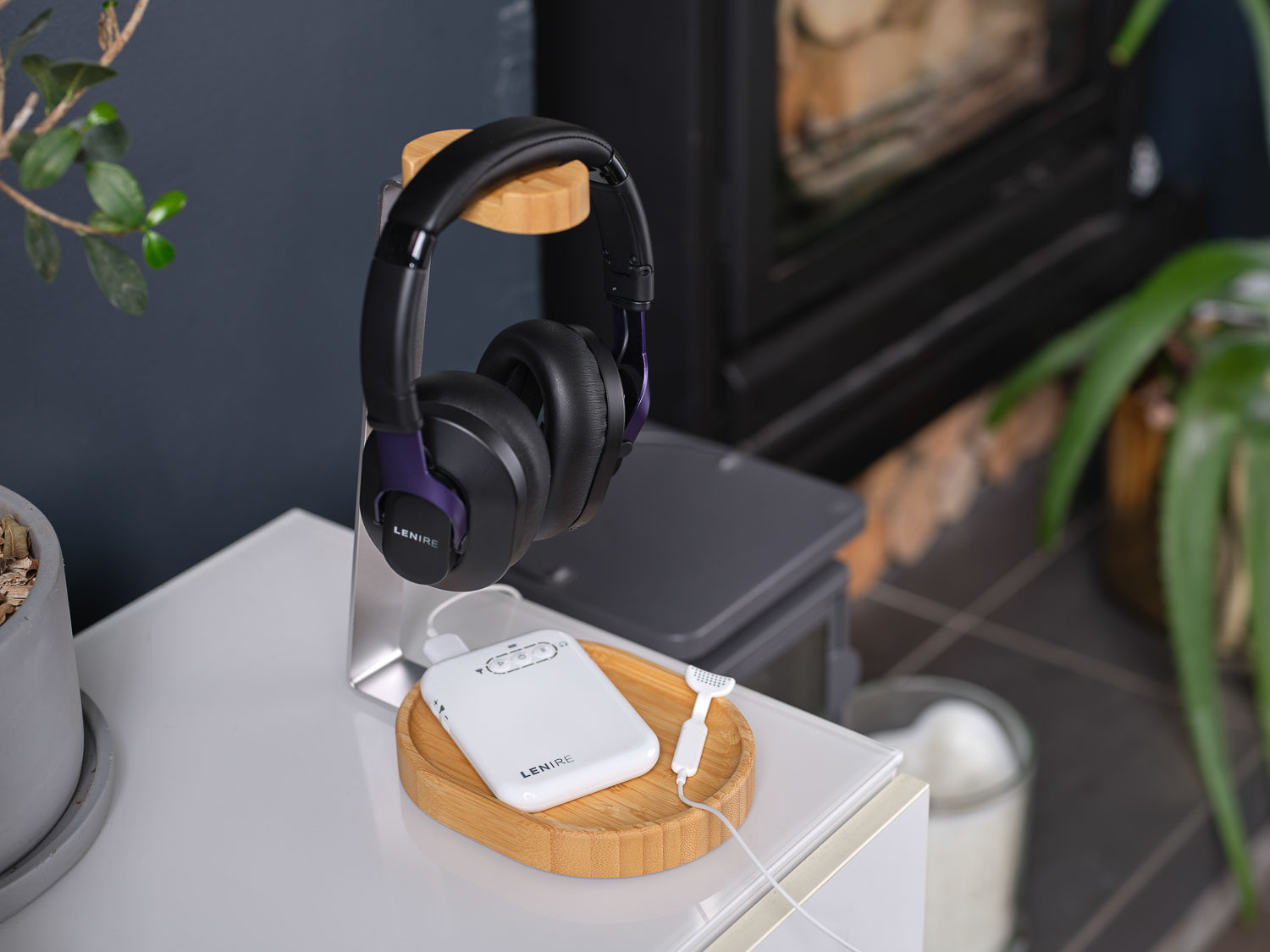
We’re delighted that our specialist tinnitus support now includes the Lenire tinnitus treatment device. This non-invasive, take home device uses a combination of sound stimulation and mild electrical stimulation of the tongue to help reduce the impact of tinnitus on your life and well-being.
Book your tinnitus consultation today to see if this innovative tinnitus treatment device could benefit you.
Tinnitus is a sensation of hearing a sound in your head or ears when there is no external sound. Different people may hear different sounds like ringing, buzzing, squeaking, crackling, humming, or even music. These sounds can be continuous or they can come and go.
Roughly 30% of the world’s population will experience tinnitus in their lifetime and 13% will have persistent tinnitus? With these kinds of figures, you’d think people would do more about it. But the reality is most people experiencing tinnitus will distract themselves from it without needing treatment, while only 20% of people will seek professional help.
You are not alone, tinnitus can affect people with or without hearing loss, and we are here to help and support you.
Our tinnitus consultations begin with a thorough investigation of your ears to see if there could be something else as the cause of your tinnitus.
We’ll start with a thorough review of your medical history before checking your ears. We’ll check the health of your ears and ear canal, along with performing a diagnostic hearing test, and any other necessary tests. Finally, we’ll complete specialist tinnitus and well-being questionnaires to ensure we have all bases covered and discuss strategies for coping with tinnitus.
Following our investigations, we’ll develop a bespoke care plan for your personal experience of tinnitus. As no two ears are the same, it’s hard to detail exactly what this care plan may include, but it could be any of the following:
- Prescription of hearing aids, either through the NHS or with us privately.
- ENT referral, should we need to rule out something medical – this can be done through the NHS or privately.
- Develop a treatment plan that may include the Lenire tinnitus treatment device and/or a combination of therapies such as cognitive behavioural therapy (CBT), sound therapy, relaxation therapy, and anchoring techniques, to name but a few. We may be able to offer you an app-based programme to utilise at home and facilitated by us, or we may refer you to one of our hearing therapists.
There may be other options we need to look at. Remember, everyone is different and what works for one person might not work for another. But one thing that’s true is that there isn’t a magic pill and whatever therapeutic pathway we look at, it may take time. You must be motivated and receptive to therapies to see positive outcomes.
Lenire is a scientifically proven tinnitus treatment technology.
The Lenire device combines mild tongue pulses with beautiful soundscapes delivered through wireless headphones to stimulate the brain and drive long term relief from tinnitus. Treatment is completed at home with our support.
Learn more about the Lenire tinnitus treatment device at lenire.com.
Heard the saying ‘so quiet you could hear a pin drop’? That’s because your brain doesn’t have the distraction of natural sounds, meaning your focus and attention is fixed on any sound that occurs. The same can be said for tinnitus and hearing loss. If you have hearing loss, your world is quieter and the sound of tinnitus can be at the forefront of your mind. To combat this, we may prescribe hearing aids, either privately or through the NHS, to amplify the sounds around you, distracting your brain and allowing you to pay less attention to your tinnitus.
There are also other reasons why hearing aids may be helpful for you. During your consultation, we will discuss whether hearing aids could benefit you.
What works for one person may not work for everyone, but many people find education counselling helpful to reduce the distress around their tinnitus. Education counselling can help you understand your tinnitus and give you some hope and help.
For others, talking therapies can help as they can lower the stress caused by tinnitus. The calmer you are, the less likely your tinnitus will get under your skin.
Absolutely! Therapy is a great thing and it can help in all walks of life, but it can also help with your tinnitus. And with a range of options available, we have therapy options to suit all budgets.
There is a type of talking therapy called cognitive behavioural therapy (CBT). This is an approach that helps you to change the way you think about your tinnitus. We can provide this through our therapists privately, refer you to the NHS, or provide you with specialist apps that you can use at home. Whatever works for you and fits into your way of life.
Sound therapies can also be very helpful for tinnitus. We can provide you with access to a wealth of relaxing sounds (some can be tailor-made to you) to relax and distract you from your tinnitus. We’ll teach you how to use them to get the best benefit.
Relaxation therapy can also help to reduce the stress of your tinnitus. We can explore this in more detail during your consultation, and provide you with relaxation therapy in clinic or, if you prefer, we can give you tools to use at home.
Some people find that their tinnitus affects their ability to get a good night’s sleep. We can work together using therapies to help you get to sleep more easily.
Depending on your needs and what we think will work best for you, we may suggest tinnitus retraining therapy. A programme that focuses on retraining your brain and focus, pushing the tinnitus away from the forefront of your mind and focusing on getting your life back.
Unfortunately, we can’t cure tinnitus, but we can help you to treat it. Not all tinnitus is permanent, but if you do have long-standing tinnitus, we can help you notice the sounds a little less and therefore help you to feel better about it. It simply isn’t true that nothing can be done to help you – there are lots of things available to help you and no matter your budget, we will guide you in the right direction.